Listeners:
Top listeners:
-
 play_arrow
Substrate Radio Freeform Radio From Alabama
music_note

If From Every Tongue It Dripped

By – Gareth Jones

For fans of experimental documentaries, international queer stories and poetry, philosophical connections between science and art
Continuing the spotlight on queer cinema for Pride Month, I decided to challenge myself by watching a film by someone I didn’t know. The Criterion Channel (always a worthy investment) has a wonderful selection this month and a great introduction by film scholar/programmer Dennis Lim and Criterion curator of Queersighted: The Queer and Now. Their conversation was quite invigorating and instructive before selection. In particular, I was struck by how they talked about how Queer filmmakers actually “queer” the filmmaking process itself in their approach. Building on the original New Queer Cinema movement of the early nineties, the New New Queer Cinema is currently challenging all methods of filmmaking. If From Every Tongue It Dripped is a perfect example of this. It played at the Berlin Film Festival and was nominated for a Teddy Award for Best Documentary/Essay Film. The film is a great example of creativity that emerged out of the confines of the pandemic. In this case, a collective of artists used technology to create a new and fascinating story.
 The film is directed by Sharlene Bamboat (a Queer Pakistani-Canadian filmmaker/experimental artist) and examines the lives of two lesbians living in Batticaloa, Sri Lanka; one on screen Ponni Arasu, who is researching Urdu poetry, specifically the censorship of the poems dealing with female sexuality and desire. The other woman is the cinematographer Sarala Emmanuel, off screen but who can be heard throughout the film and at one point has her legs against Ponni. For much of the film, Ponni is explaining the history and nature of the poetry and at times performing it. She does this in the intimate comfort of home and also in public in groups
and at gatherings. Along the way, there are also discussions about quantum physics, specifically quantum entanglement which can be seen as a metaphor for the queer love. Quantum physics also comes into play when one examines how multiple times and places can exist simultaneously, in this case the poetry as well as the people who have been affected by diaspora.
The sound design is quite significant as it folds into the very inventive, poetic, and immensely descriptive subtitles. The sound was designed by Richy Carey in Scotland (reinforcing the collective nature of the film’s creation) and through conversations with Bamboat in Montreal and Ponni/Sarala in Batticaloa, the layering of sounds was developed. It is quite extraordinary as it at first appears to all be recorded live by Sarala. The cinematography was all shot on the phones of Ponni and Sarala and the footage was sent to Bamboat to edit together and then Carey would layer the sounds.
The captions of the film are an artform unto themselves. They were created by Collective Text, a group who also work in Scotland. The captions are different colors and also fade in and out of focus. They appear in unusual areas on screen. One of the best examples of this is the “caw” of crows is a consistent sound and subtitle throughout the film. The captions also represent the theme of translation as they are often presented in multiple languages and sometimes not even translated. The captions have a poetic nature in the way they are written. We are in a very fascinating time now with captions being more and more descriptive for all audiences (from the hard of hearing to everyone who wants to clearly see what is said or happening.).’
One additional layer that the film presents is the way that colonialism led to nationalism, in both cases leading to the “purification” of the arts. In this case the removal of any poetry that dealt with or celebrated queer love is discussed and examined. There are so many levels to dive into with this film and shows how new and emerging artists like Sharlene Bamboat are challenging traditional representations of queerness and filmmaking itself.
Available to stream on the Criterion Channel
Similar posts

Featured post
Latest posts

TAGABOW Just Dropped a Massive, Collaborative Mixtape With Almost 30 Tracks On It

Wishy – “Nature’s Pill” Album Review

Wake Up, Babes: A Vintage, Previously Unreleased Swervedriver Demo Track Just Dropped

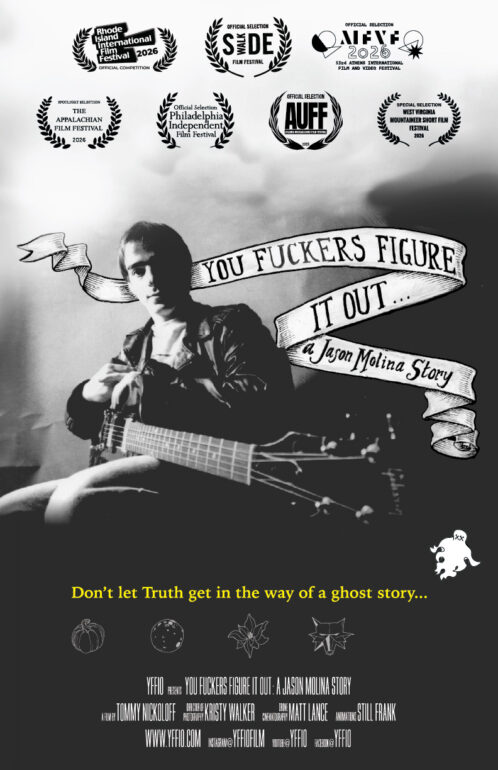
Film Review: You Fuckers Figure It Out: A Jason Molina Story

The World’s Greatest Scottish Power-Pop Band Just Dropped a Brand New Single
Current show

Early Morning With Substrate
Jason's playlist just for you
Wake up Early with our specially curated playlist
closeUpcoming shows